


AI agents have moved from prototypes to production. Teams are done testing chatbots or prompt chains. They now need systems that plan, reason, and act on their own.
LangChain’s State of AI Agents report shows that 51% of companies already run agents in production, and 78% plan to scale that use this year. Index.dev estimates the global agent platform market will double from 3.7 billion dollars in 2023 to 7.3 billion dollars by 2025.
These ten platforms are leading that shift. Some focus on developers, others on business users, but all share the same goal: making AI productive, reliable, and measurable.
Methodology
We sourced this list by reviewing research and market analyses focused on AI and agent technology. The goal was to highlight companies building real AI agents, not generic AI tools.
We reviewed public datasets, reports, and venture lists, then evaluated each company individually to confirm it develops agent-driven products that plan, reason, and execute autonomously. Some well-known AI vendors are not included for this reason.
After narrowing the list, we compared firmographic data, funding, and product updates to ensure the information was current. The final ten reflect the companies most aligned with real agent deployment today.
1. Vercel AI
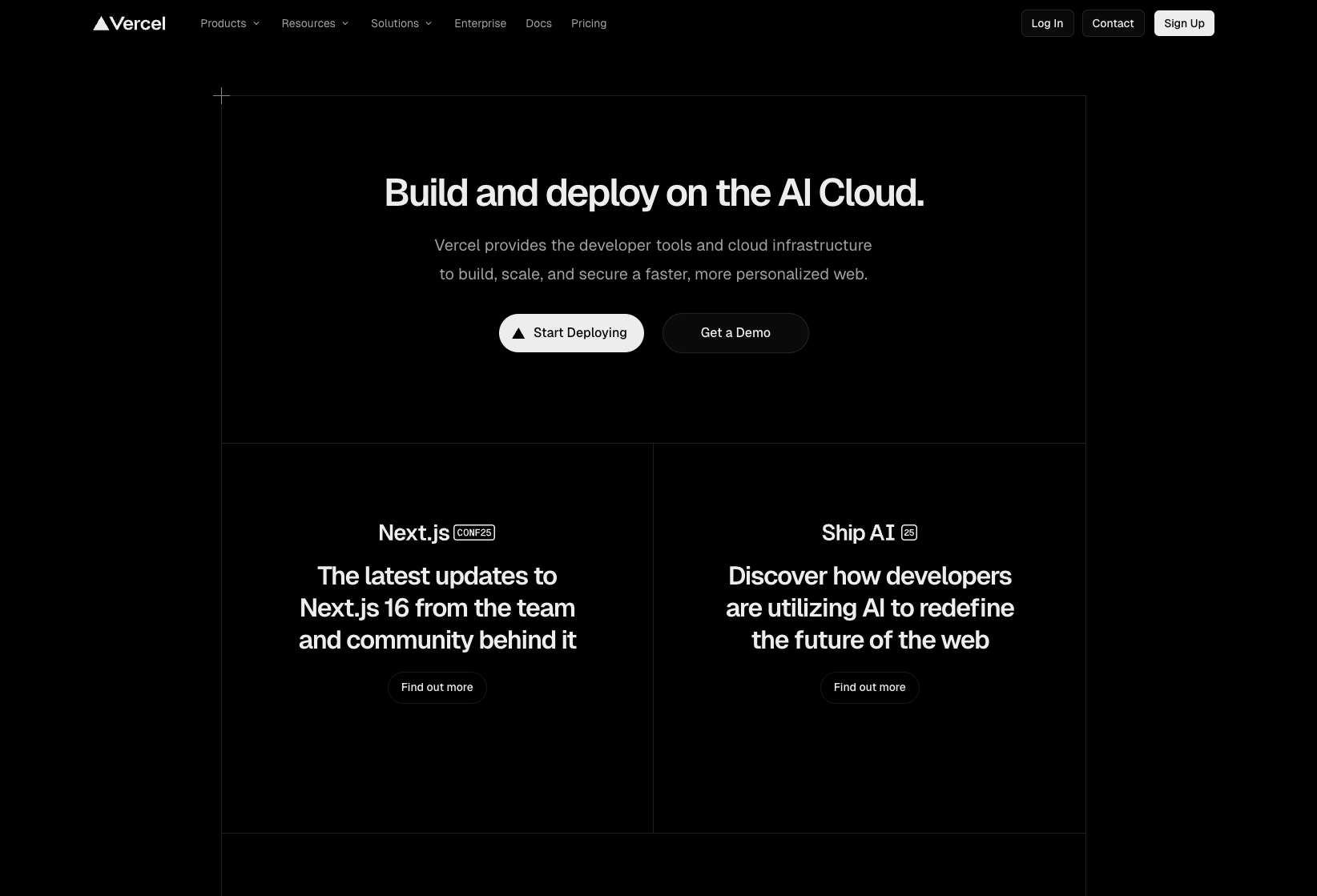
Vercel AI gives developers a clear path from prototype to production. Its SDK, templates, and inference caching make it easy to build real-time AI apps on frameworks like Next.js. Deployment takes minutes and scales automatically.
CEO Guillermo Rauch said it best: “For a decade, Vercel has been the go-to platform for web development, and as AI transforms applications, we have evolved our infrastructure to match. The AI Cloud enables organizations to build at the speed of ideas, and this investment accelerates our ability to provide the secure, scalable foundation enterprises need as AI agents become integral to their workflows.”
Kasada used Vercel’s AI SDK Playground to protect AI-powered web apps from automated abuse. The team deployed edge-enabled filters and tiered access for anonymous and verified users, maintaining speed while blocking bots.
Source: Vercel
Best for: Engineering teams shipping production-grade agents fast
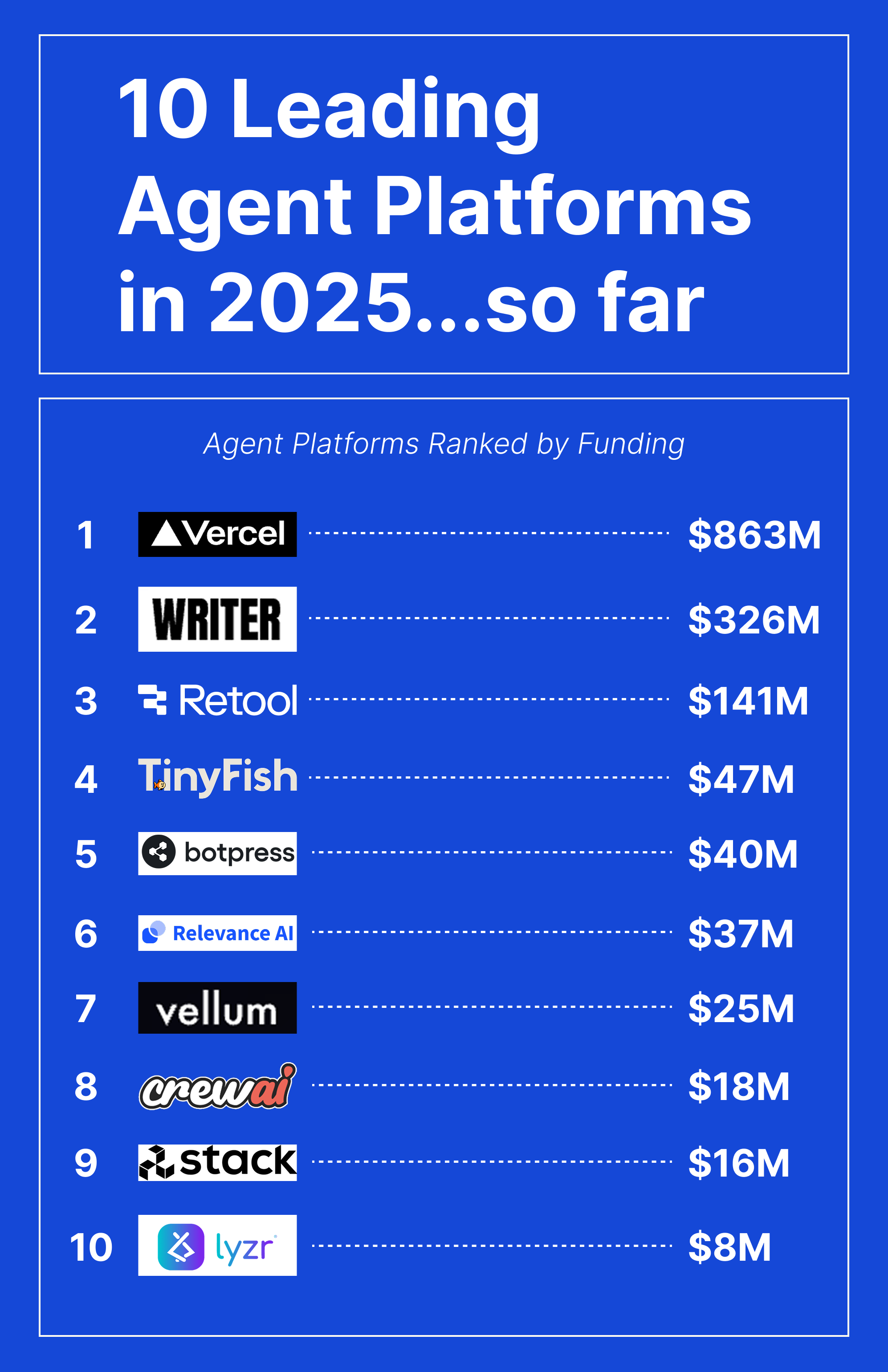
Funding: $863M
Website: vercel.com/ai
For more on Vercel and other agents, visit our agent directory.
2. Writer
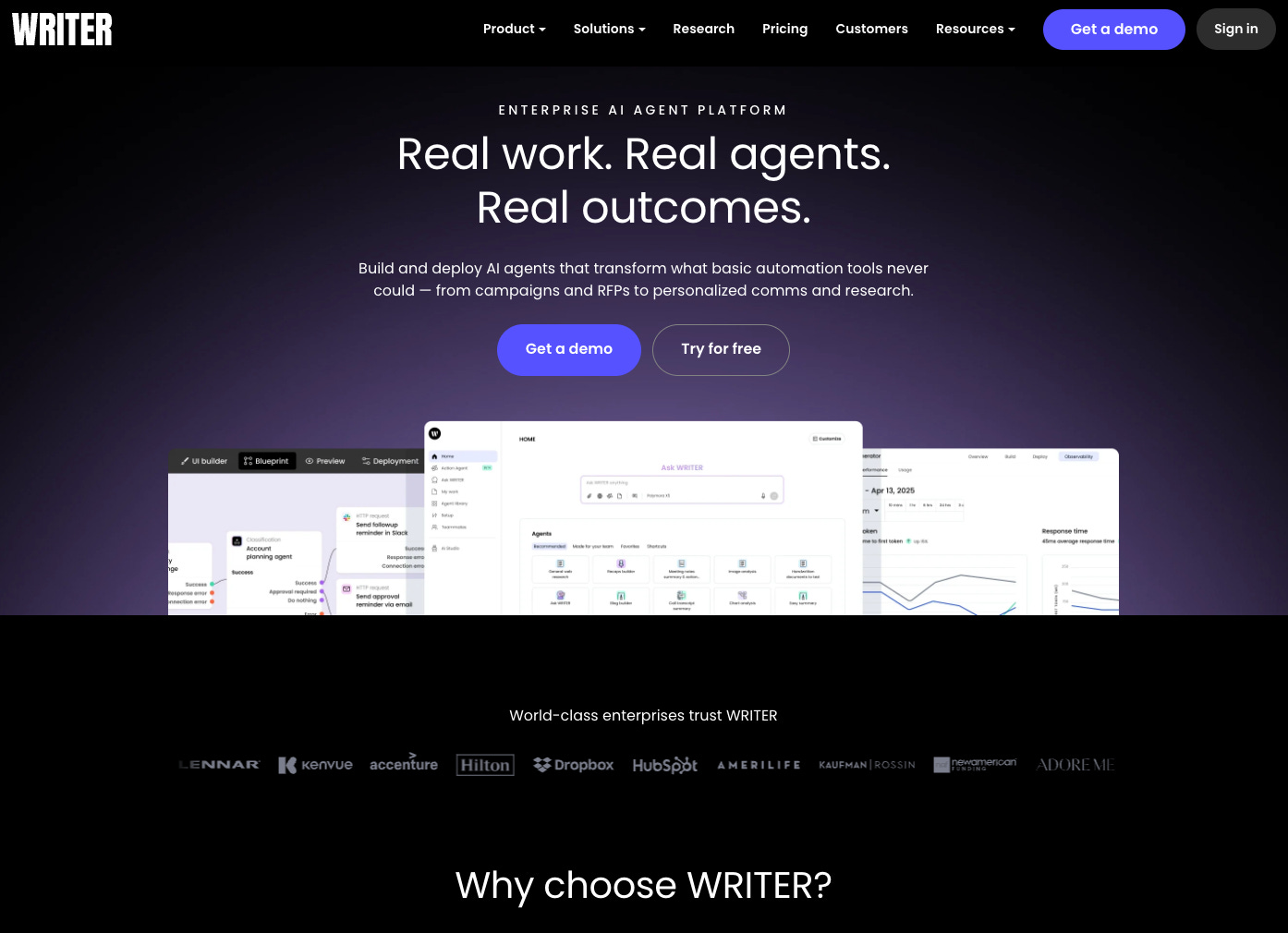
Writer focuses on enterprise-grade AI with strong data control. Its agent platform deploys assistants that maintain brand tone and meet compliance standards.
Co-founder and CEO May Habib said, “Generative AI challenges the concept of done.” That mindset drives Writer’s focus on quality and consistency across enterprise content.
Writer worked with AWS to deploy private-cloud models for a Fortune 500 financial firm, producing secure, on-brand content while meeting governance requirements.
Source: AWS Case Study
Best for: Enterprises focused on privacy and compliance
Funding: $326M
Website: writer.com
For more on Writer and other agents, visit our agent directory.
3. Retool
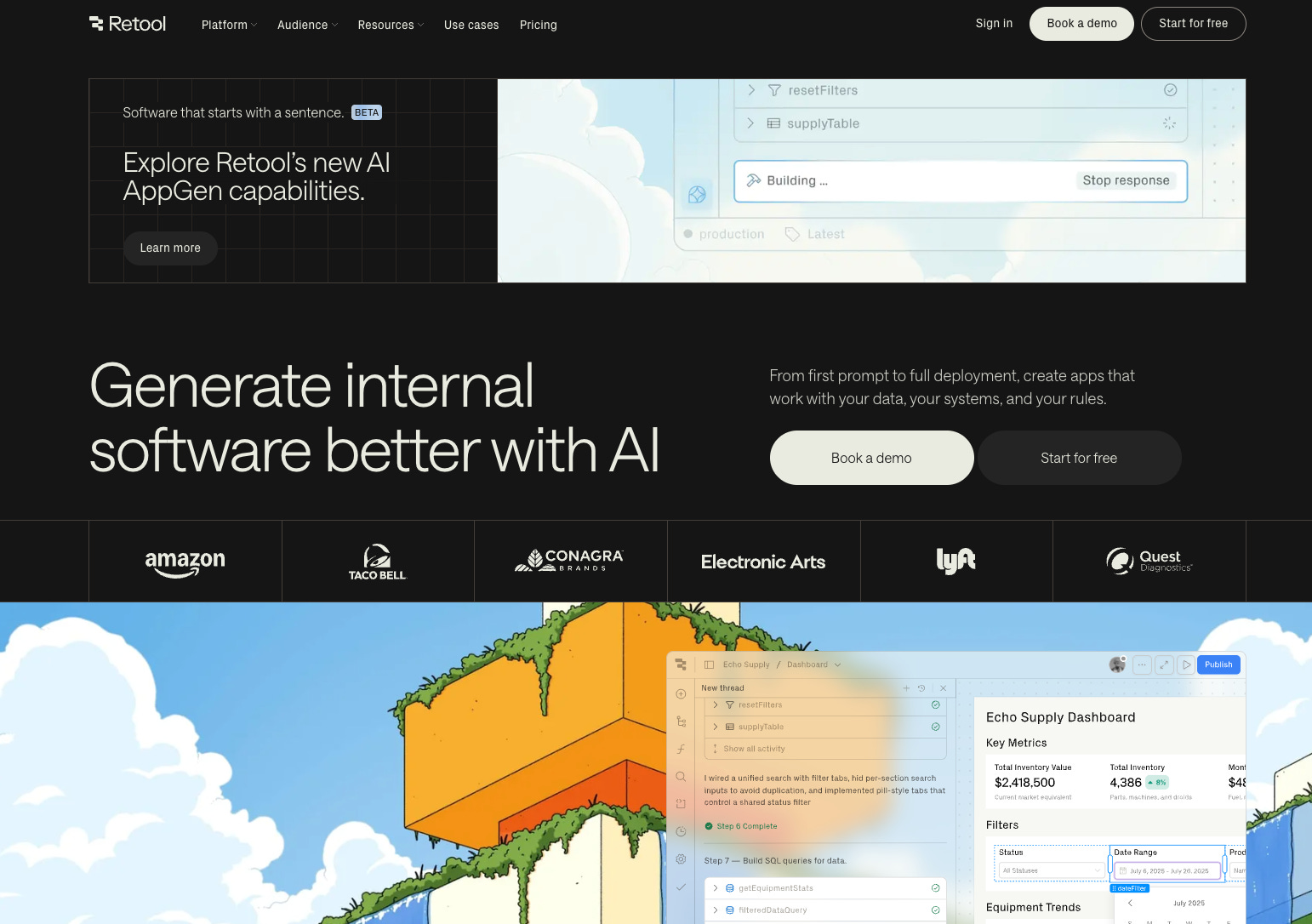
Retool brings AI into the same low-code framework developers use for internal tools. Its builder connects data sources, chains prompts, and applies business logic quickly.
Founder and CEO David Hsu summed up the company’s view: “What generative AI is bad at, Retool is good at.”
A founder used Retool Agents to automate recruiting workflows that had stalled for over a year. The system now screens and schedules candidates automatically, cutting repetitive work by half.
Source: Retool
Best for: Product and operations teams adding AI to internal workflows
Funding: $141M
Website: retool.com/ai
For more on ReTool and other agents, visit our agent directory.
4. TinyFish
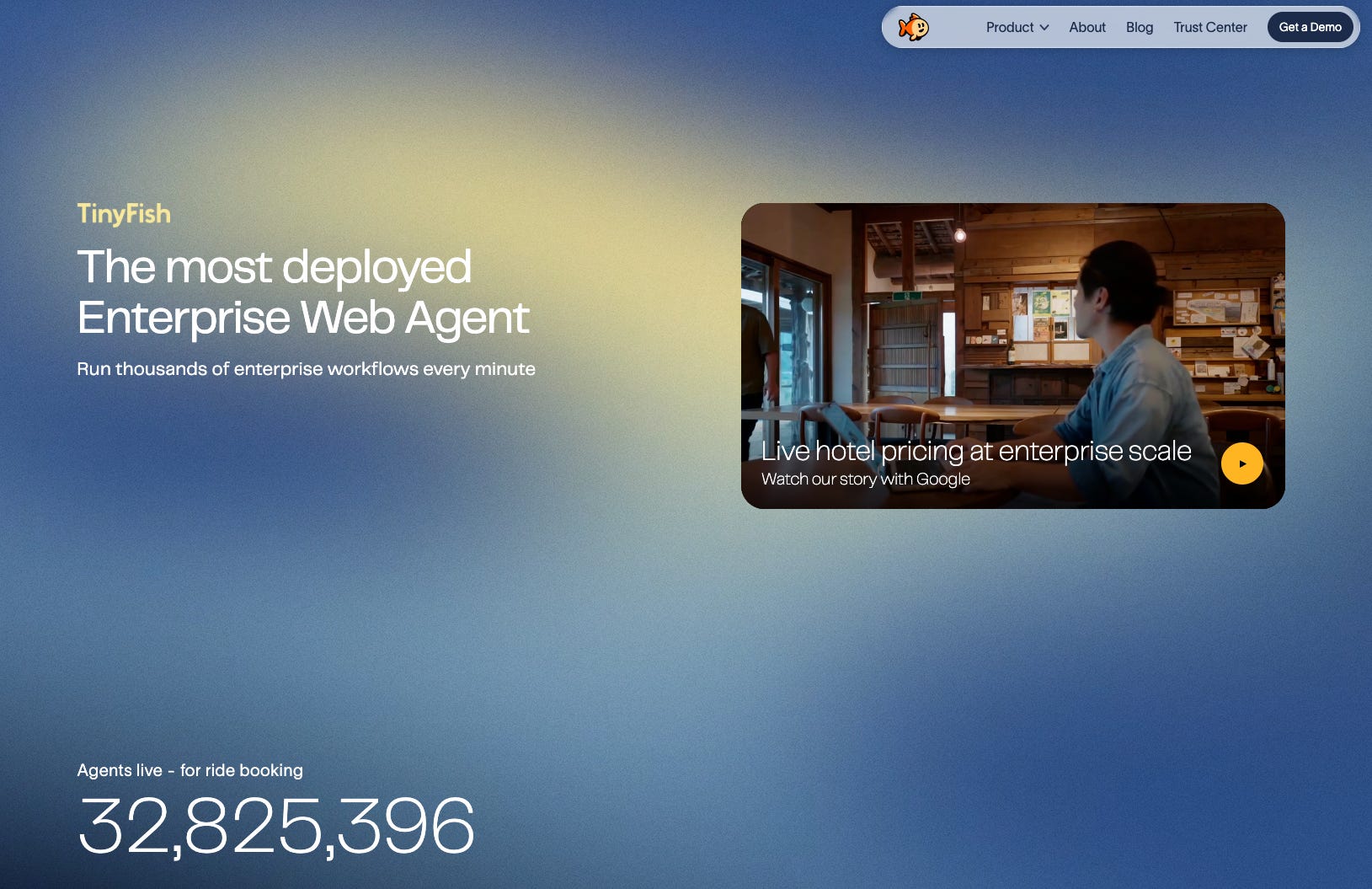
TinyFish helps teams run multi-agent systems that stay stable under load. It focuses on orchestration, memory, and observability so agents can coordinate specialized tasks.
CEO Sudheesh Nair said the company’s mission is to “amplify the high-value, outcome-driven processes that require human-like interaction at scale,” not just automate low-value tasks.
A global travel company replaced brittle scraping tools with TinyFish’s autonomous agents. The new setup collects and structures public data daily, cutting manual research time by 90 percent.
Source: Reuters
Best for: Startups experimenting with autonomous systems
Funding: $47M
Website: tinyfish.ai
For more on Tinyfish and other agents, visit our agent directory.
5. Botpress
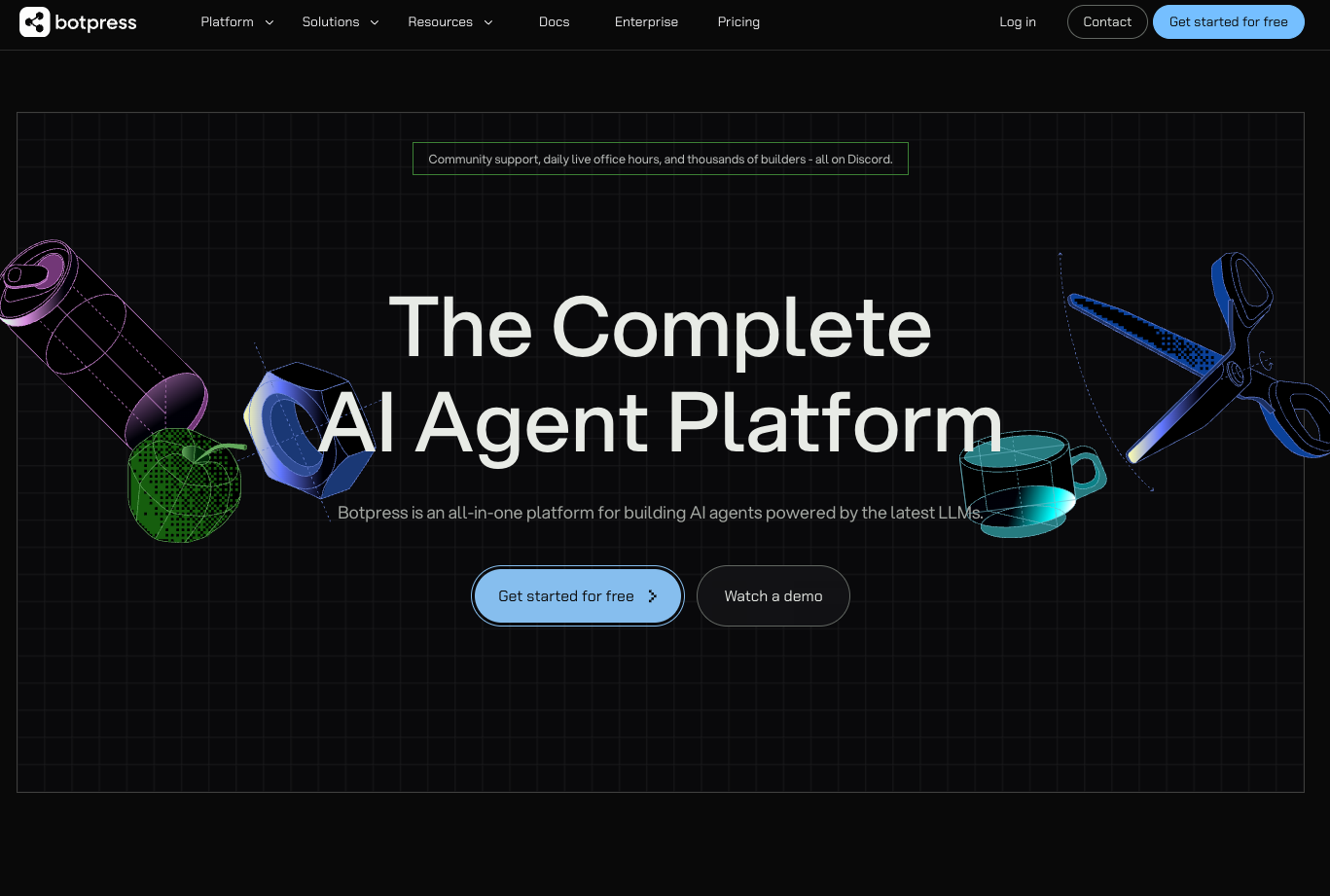
Botpress specializes in conversational agents. It combines visual flow design with LLM reasoning and connects to Slack, Teams, and web chat.
Founder and CEO Sylvain Perron said, “AI agents will replace entire categories of software over the next decade, but most of the infrastructure required to run these agents safely at scale is still missing.”
A healthcare provider launched a patient-support chatbot with Botpress in two weeks. The agent now handles 70 percent of routine questions and cut support volume by 40 percent.
Source: Botpress
Best for: Support and service automation
Funding: $40M
Website: botpress.com
For more on Botpress and other agents, visit our agent directory.
6. Relevance AI
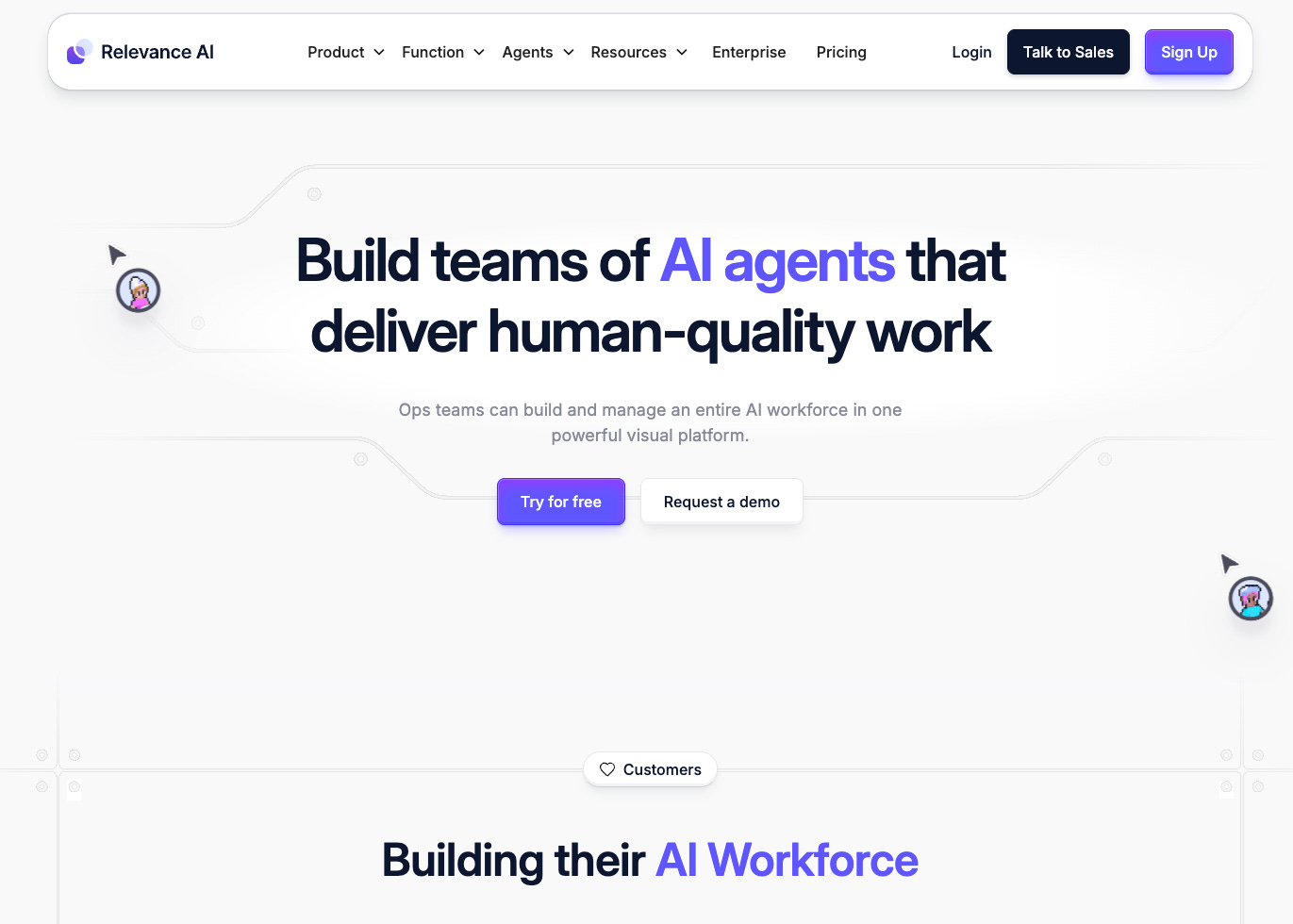
Relevance AI builds compound systems that mix structured data, retrieval, and LLM reasoning. It includes templates for analytics and automation with robust APIs.
The founders said they believe “every company in every industry will deploy AI agents as a core part of their workforce.”
A research agency switched from manual data labeling to Relevance AI’s agents, cutting turnaround time from days to under an hour.
Source: Relevance AI
Best for: Data-driven teams building reasoning pipelines
Funding: $37M
Website: relevanceai.com
For more on Relevance AI and other agents, visit our agent directory.
7. Vellum
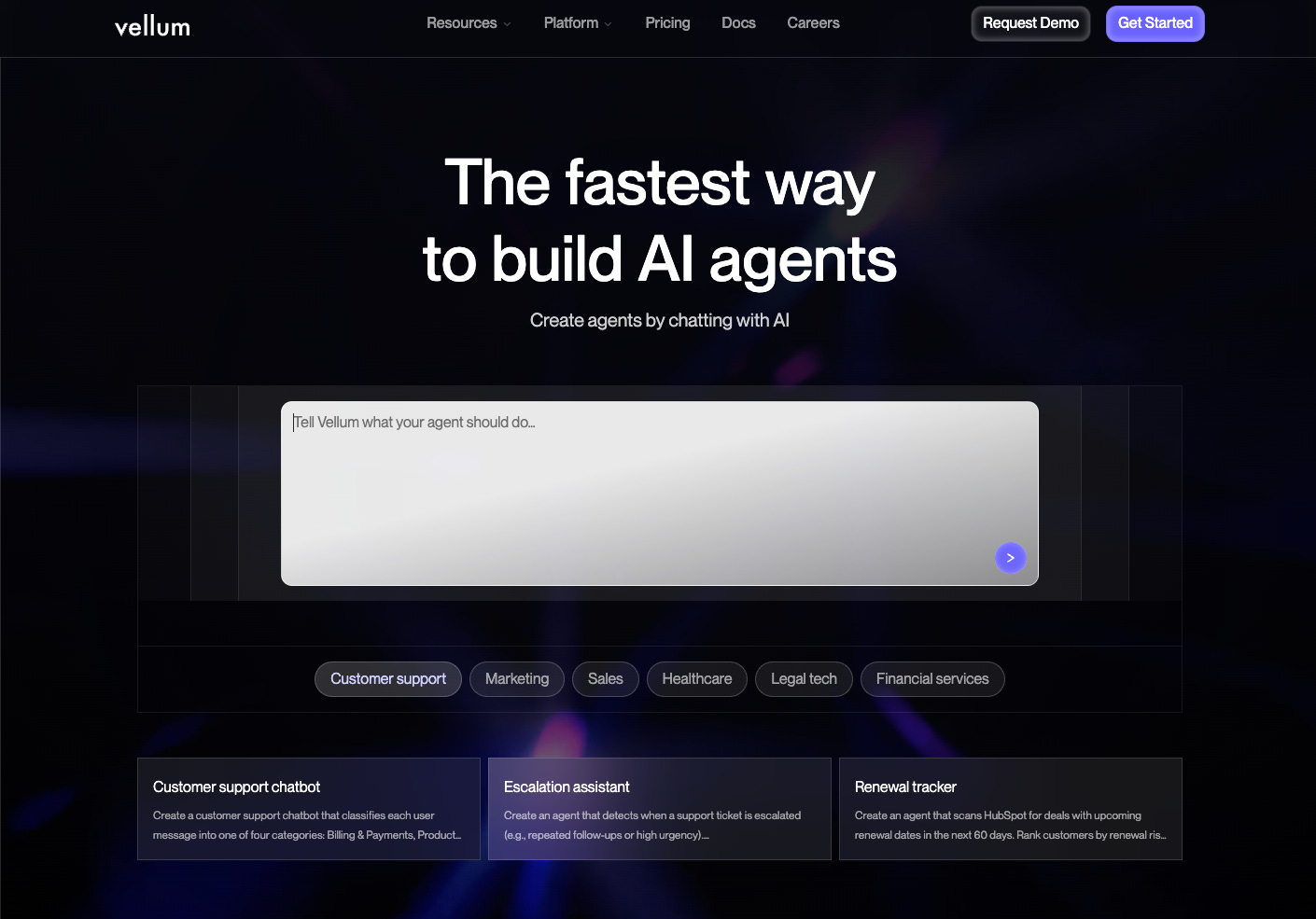
Vellum helps developers manage prompts, evaluate outputs, and monitor LLMs in production. It provides version control, dataset testing, and live monitoring.
Its leadership team says the goal is simple: “Help companies realize the true value of AI.”
CourseMojo used Vellum to manage rapid growth in online learning programs from 7 thousand to 60 thousand students in one year.
Source: Vellum
Best for: Developer teams managing model operations
Funding: $25M million
Website: vellum.ai
For more on Vellum and other agents, visit our agent directory.
8. CrewAI
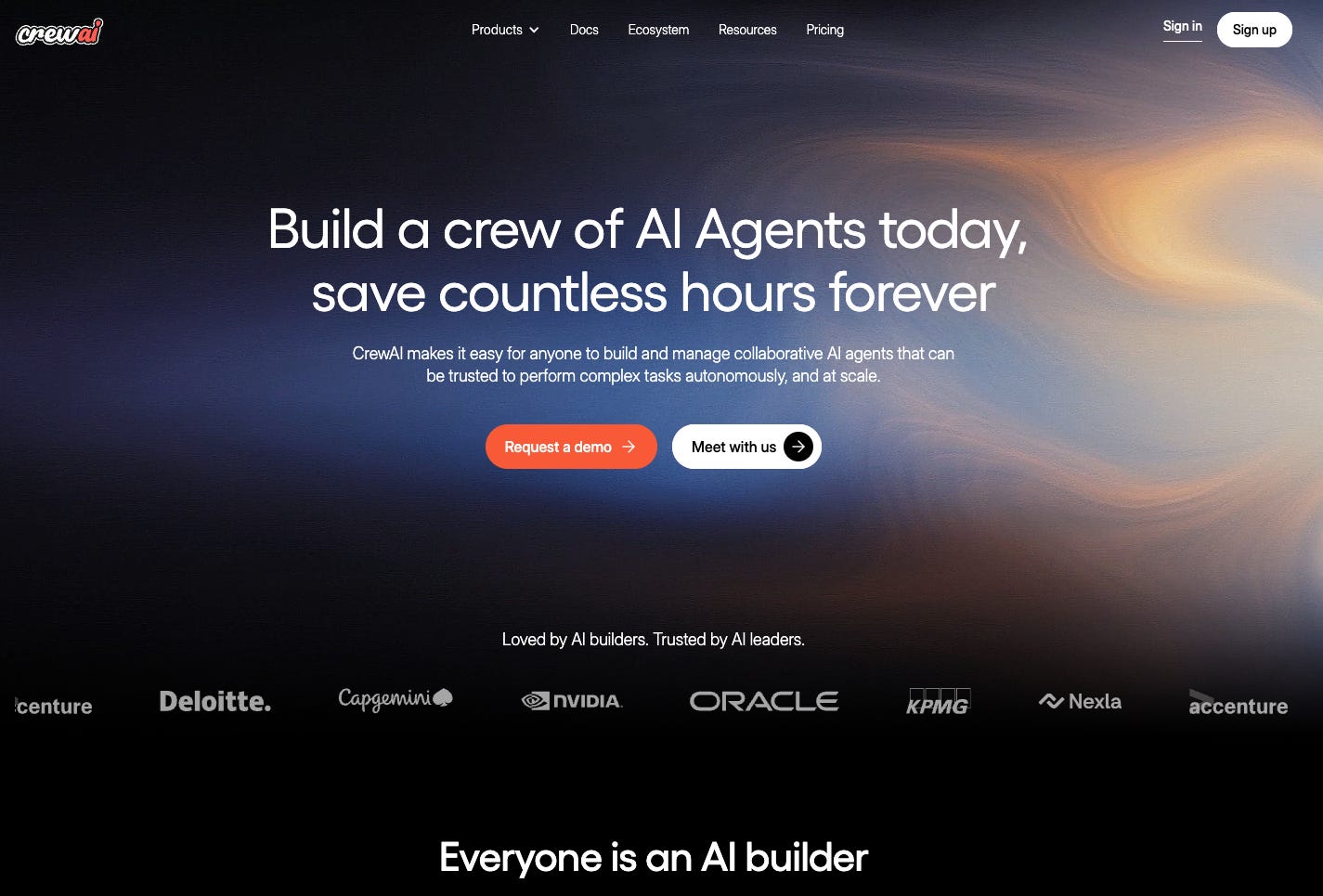
CrewAI is an open-source framework for orchestrating multi-agent systems. It enables developers to build crews of agents that share memory and coordinate tasks.
Founder João (Joe) Moura said, “We are building an industry together. We are defining what an agentic workforce looks like. Agents are inevitable, and this is just the beginning.”
Brickell Digital used CrewAI to build an autonomous agent that scrapes fundraising databases and VC networks, scores prospects, and prepares audit insights for sales calls. The agent lifted qualified-lead volume by 80 percent and supported team growth from 3 to 14 employees.
Source: CrewAI
Best for: Developers building open, composable agent systems
Funding: $18M
Website: crewa.ai
For more on CrewAI and other agents, visit our agent directory.
9. Stack AI
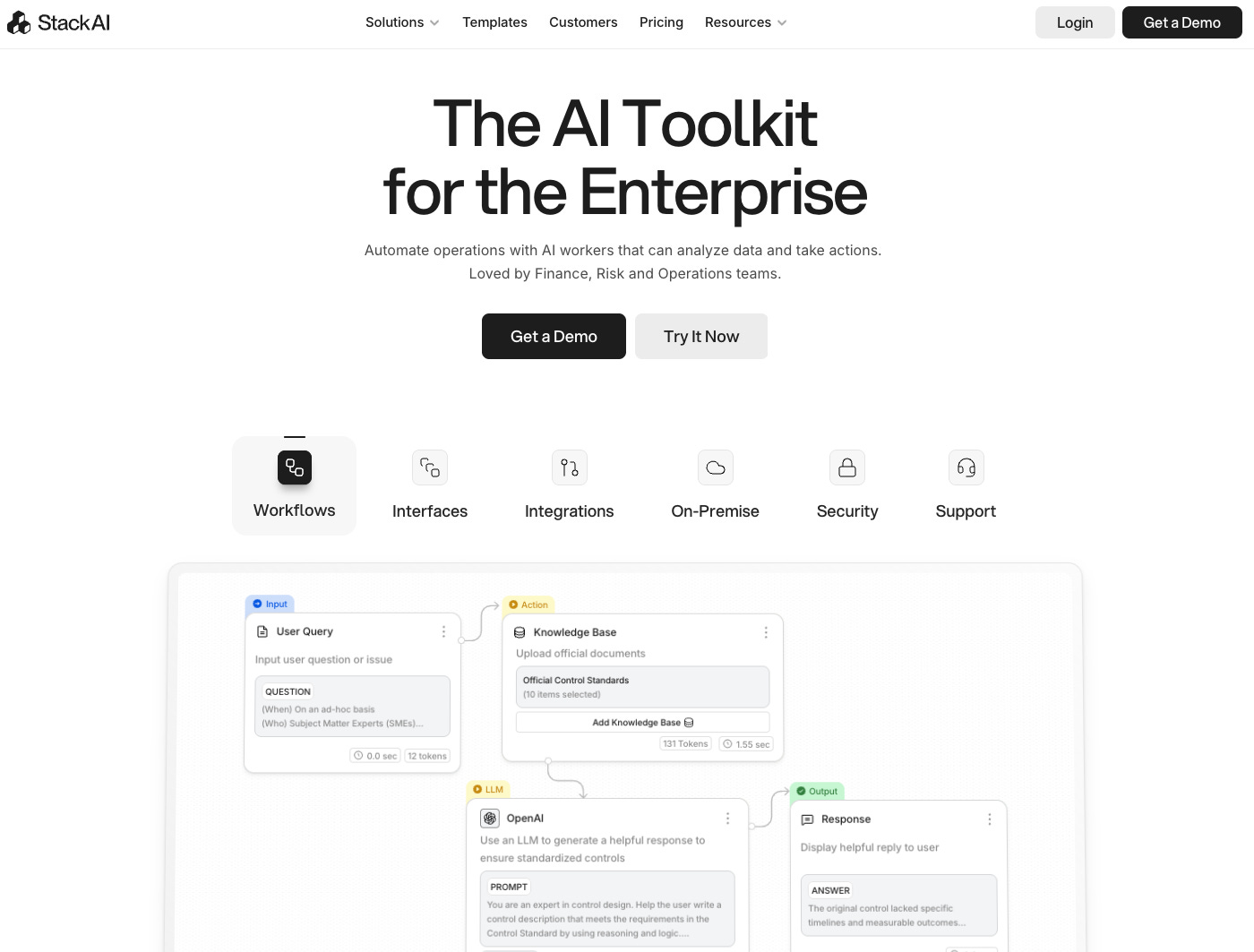
Stack AI offers a no-code builder for multi-step workflows. Teams can connect APIs, add logic, and publish production agents without writing code.
Co-founders Toni Rosinol and Bernard Aceituno said their goal is simple: “Enable any organization to deploy custom AI agents to automate its back-office operations.”
A healthcare company used Stack AI to process over 2.5 million agent actions, saving 475 thousand hours and cutting response times from minutes to seconds.
Source: Stack AI
Best for: Non-developers building internal automation
Funding: $16M
Website: stack-ai.com
For more on Stack AI and other agents, visit our agent directory.
10. Lyzr
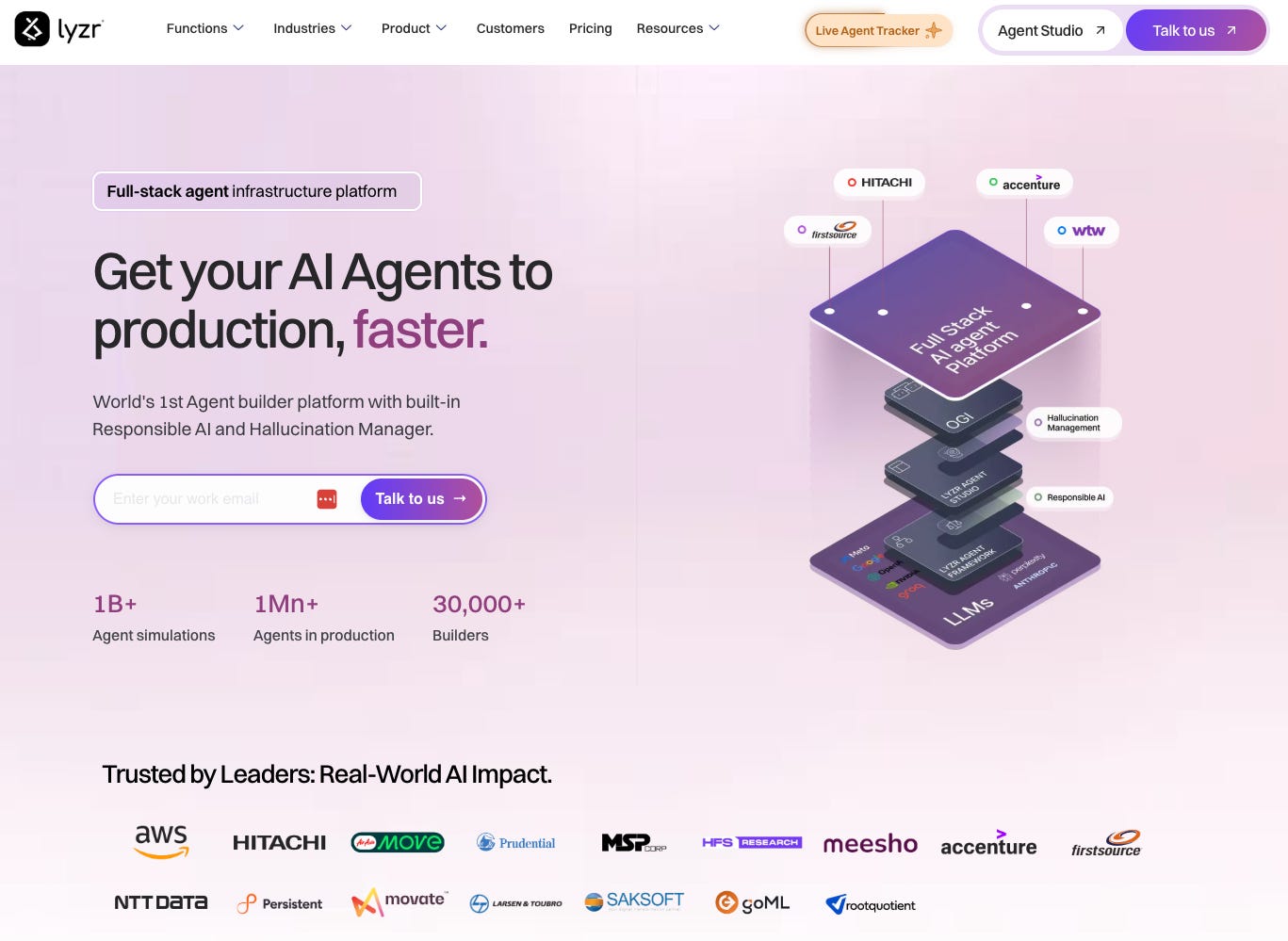
Lyzr focuses on multi-agent orchestration and observability. It lets teams connect specialized agents, track performance, and manage context memory.
Founder Siva Surendira put it plainly: “Agents are not designed to please you. They are designed to work reliably.”
A global investment firm used Lyzr to automate acquisition research. The system scanned thousands of companies and increased analyst throughput by three times.
Source: Lyzr
Best for: Large companies managing multi-agent systems
Funding: $8 million
Website: lyzr.ai
For more on Lyzr AI and other agents, visit our agent directory.
Key Trends in Agent Platforms
Multi-agent orchestration has moved from theory to production. Companies now rely on agents that delegate tasks, manage context, and collaborate instead of acting alone Syncari / Talan
Agent infrastructure is now an enterprise concern. Observability, governance, and integration are top priorities Gartner / TechTarget
Adoption is accelerating but results vary. Index.dev reports that 85 percent of companies have agents live in at least one workflow, while Gartner expects 40 percent of projects to be dropped by 2027 due to poor execution Index.dev / Reuters
Agents are expanding the definition of AI in production. McKinsey’s Superagency report shows top teams use agents for full task cycles: conversation, decision, and action McKinsey
Open protocols are shaping interoperability. Microsoft’s Azure Foundry Agent Service supports the Model Context Protocol and agent-to-agent APIs, creating early standards for multi-agent ecosystems Microsoft
Frequently Asked Questions
What is an AI agent platform?
A platform that provides the tools to build, deploy, and manage agents that plan, reason, and act on behalf of users or teams.
How are AI agents different from chatbots?
Chatbots only respond. Agents decide, act, and update systems.
What are the main categories of agent platforms?
Developer infrastructure (Vercel, CrewAI, Vellum), enterprise platforms (Writer, Relevance AI), operational builders (Retool AI, Stack AI), and conversational/orchestration tools (Botpress, TinyFish, Lyzr).
Which agent platforms are best for enterprises?
Writer and Relevance AI. They emphasize compliance, security, and data governance.
Which are best for developers?
Vercel, CrewAI, and Vellum. They provide versioning, observability, and API control.
What are the top business uses?
Customer support, lead qualification, research, workflow coordination, and content generation.
How fast is the market growing?
From 3.7 billion USD in 2023 to 7.3 billion USD in 2025 (Index.dev).
Closing Thoughts
Agent platforms are moving from early testing to real business use. The companies in this list show that reliability, observability, and cost control matter more than model size or hype.
The next phase is about scale and accountability. Developers want infrastructure they can monitor and debug. Business teams want measurable results. Investors are backing the teams that can do both.
If you are building in this space, you are part of the group shaping how software will work for the next decade. Every deployment reveals what holds up in production and what still needs work.
This list will change as new entrants appear, especially in open source and enterprise orchestration. The direction is clear: agents are becoming the new interface to software.
Sources: LangChain State of AI Agents 2025; Index.dev AI Agent Market Forecast 2023–2025; Gartner; McKinsey; Microsoft; company websites and press releases.
Solid roundup. I also like Sierra AI for customer-facing agents.